If your child’s glasses prescription keeps getting stronger, they may have progressive myopia, or nearsightedness. Myopia makes faraway objects look blurry, and it often begins in childhood.
Glasses and standard contacts can help your child see clearly, but they do not always slow the eye growth that causes myopia to worsen. That is where myopia management in Jacksonville, FL, can help.
One option your eye doctor may recommend is orthokeratology, often called ortho-k.
What is ortho-k?
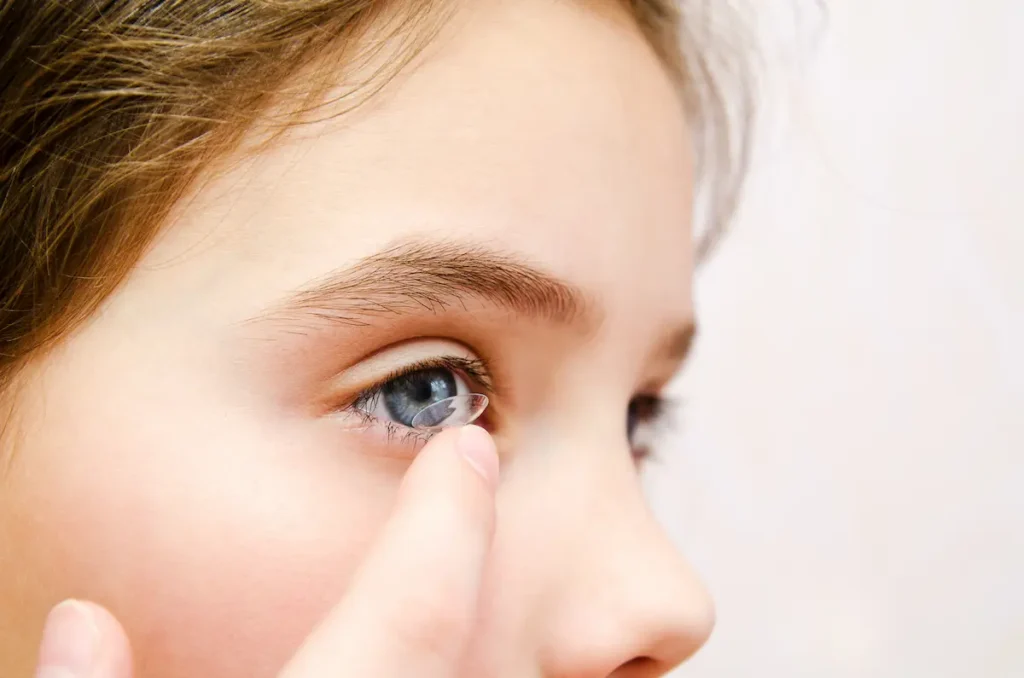
Ortho-k uses custom contact lenses that your child wears while sleeping.
These lenses gently reshape the cornea, which is the clear front surface of the eye. In the morning, your child removes the lenses and may be able to see clearly throughout the day without glasses or daytime contacts.
Ortho-k lenses are:
- Worn overnight
- Removed in the morning
- Custom fit to your child’s eyes
- Designed to temporarily reshape the cornea
- Used consistently to maintain clear daytime vision
If your child stops wearing ortho-k lenses, their cornea gradually returns to its original shape, and blurry distance vision usually comes back.
How does ortho-k slow myopia?
Myopia often gets worse when the eye grows too long from front to back. This is called axial elongation.
As the eye lengthens:
- Distance vision becomes blurrier
- The prescription may increase
- The risk of high myopia can rise over time
Ortho-k may help by changing how light focuses across the retina. Standard glasses correct central vision, but peripheral light may still focus in a way that encourages the eye to keep growing.
Ortho-K reshapes the cornea so peripheral light focuses differently. This may help reduce the signal for the eye to lengthen, which can slow myopia progression.
Why slowing myopia matters
Myopia is not just about needing stronger glasses. Higher levels of myopia can increase the risk of certain eye health problems later in life, including:
- Retinal problems
- Glaucoma
- Cataracts
- Myopic maculopathy
Slowing myopia during childhood may help reduce the chance that your child develops high myopia as they grow.
Is my child a candidate for ortho-k?
Ortho-k may be a good fit for children who:
- Have a prescription that keeps changing
- Play sports or spend time being active
- Dislike wearing glasses
- Want clear daytime vision without contacts
- Can follow lens care instructions with parent support
However, not every child is a candidate. A comprehensive pediatric eye exam in Jacksonville, FL, can help determine whether ortho-k is appropriate.
Your eye doctor will evaluate your child’s:
- Prescription
- Eye health
- Corneal shape
- Myopia progression
- Ability to safely manage contact lenses
Why a full eye exam is important
School vision screenings can be helpful, but they are limited. They may not fully evaluate eye health, focusing ability, or whether your child’s myopia is progressing.
Because screenings are not designed to catch every vision concern, a comprehensive exam can help uncover what school vision screenings miss and guide the next steps for your child’s care.
Schedule a myopia management exam
Ortho-K does not cure myopia, but it can be an effective way to help manage progression in many children.
If your child’s prescription keeps getting stronger, Baymeadows Vision Center can evaluate their eyes and recommend a personalized treatment plan.
Schedule an appointment to learn whether ortho-k is right for your child.