Your child may see clearly on a vision chart but still struggle when their eyes do not work together comfortably. Binocular vision problems can affect reading, schoolwork, sports, and daily activities — and children do not always have the words to explain what feels wrong.
Dr. Monica Brown is a Certified Orthoptist and optometrist with specialized training in eye coordination, double vision, and binocular vision concerns.
Headaches, eye strain, or frequent breaks
Headaches and tired eyes can have several causes. However, pay attention when they happen repeatedly during reading, homework, screen time, or other close-up activities.
Your child may say that:
- Their eyes hurt or feel tired
- Reading makes them feel uncomfortable
- They need to stop often to rest their eyes
- They have trouble concentrating on near tasks
Reading feels harder than it should
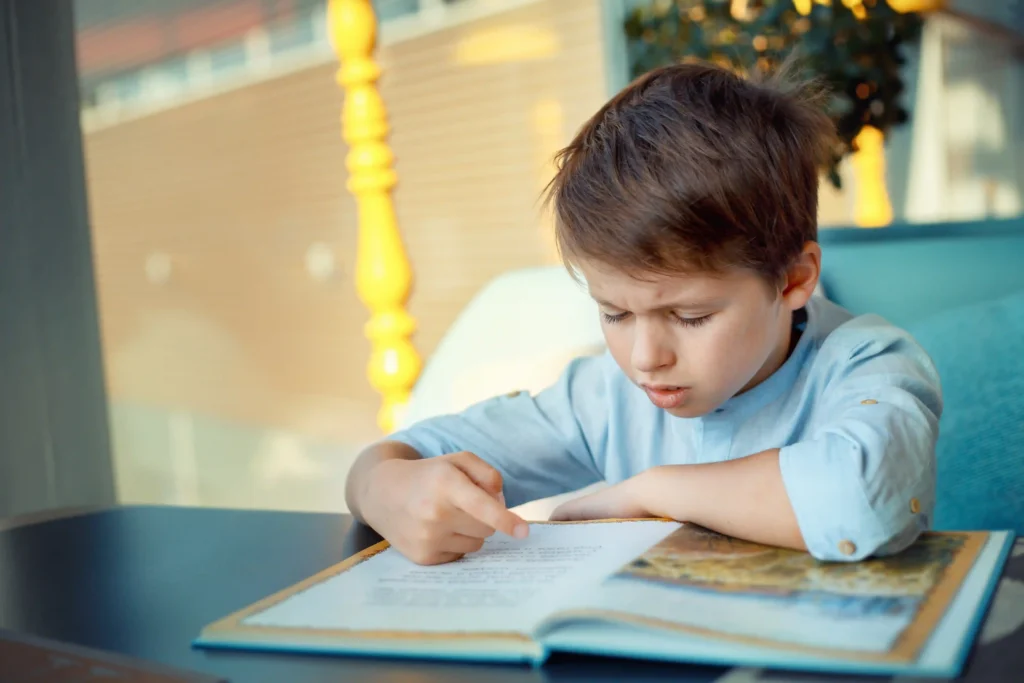
When the eyes have trouble teaming together, reading can take extra effort. A child may understand the material but still find it frustrating to stay on the right line or maintain focus.
Common signs include:
- Losing their place or skipping lines
- Rereading words or sentences
- Using a finger to follow along
- Reading slowly
- Avoiding homework or reading for pleasure
- Saying words seem to move, blur, or double
These symptoms can sometimes look like an attention or learning concern, so it is important to rule out vision issues as part of the process.
Squinting, covering one eye, or tilting the head
Children often adapt to visual discomfort without realizing it. They may squint, cover one eye, close one eye, or tilt their head to make vision feel clearer or more comfortable.
You might notice these habits when your child is:
- Reading or doing homework
- Watching television
- Using a tablet or computer
- Looking at something far away
- Playing outside in bright light
Double vision or trouble keeping things clear
Double vision should always be evaluated by an eye doctor. Younger children may not describe it as “double vision,” though. They may say their eyes feel strange, words look funny, or it is hard to make things stay clear.
Trouble focusing may also lead to frustration, short attention spans during close work, or a reluctance to complete visually demanding tasks.
Difficulty with sports or judging distances
Binocular vision helps the brain use information from both eyes to judge distance and depth. If eye coordination is affected, your child may have a harder time moving confidently through their environment.
Watch for repeated difficulty with:
- Catching or hitting a ball
- Going up or down stairs
- Judging curbs, steps, or distances
- Bumping into objects
- Feeling confident during active play
A comprehensive eye exam can help find the cause
School vision screenings can be useful, but they may not assess eye tracking, focusing, alignment, or how well the eyes work together. A comprehensive pediatric eye exam in Jacksonville, FL, gives your child’s eye doctor a more complete view of their vision and eye health. Binocular vision disorders can cause symptoms that affect comfort, reading, and coordination, even when a child appears to see clearly at a basic screening.
If your child regularly struggles with headaches, reading, focus, or coordination, a binocular vision problem may be part of the picture. Schedule an eye exam to find out whether binocular vision may be affecting your child’s daily comfort, confidence, or performance at school.